The software-defined vehicle conversation has, almost by default, become an Electric Vehicle (EV) conversation. Ask a typical automotive engineer to picture a software-defined vehicle and chances are they’ll picture something electric. It’s an understandable association – new platforms, clean-sheet architectures, Over-the-air (OTA) updates built in from day one.
But it’s also an assumption the Tata Sierra quietly dismantles.
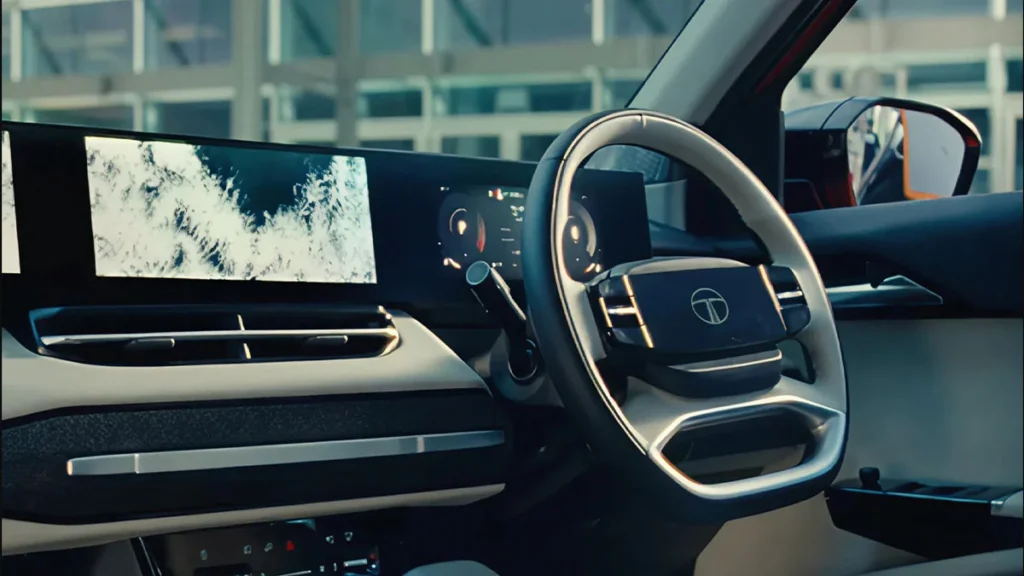
Now in production in India, the Sierra is a gasoline-powered vehicle engineered from inception as a software-defined platform. OTA update capability and remote diagnostics aren’t retrofit additions. Instead, they are core to the Sierra’s infrastructure. It represents an implementation of eSync Alliance specifications, delivered by Alliance member Excelfore in partnership with Tata Motors Passenger Vehicles, making it our first production deployment on a software-defined internal combustion engine vehicle in India.
The platform assumption
There’s an understandable logic behind the assumption that SDV capability requires an EV platform. Electric vehicles start with clean architectures and no legacy hardware constraints. But that assumption has a significant blind spot: the vast majority of vehicles on the road – and the vast majority that will still be sold in the next decade – run on internal combustion engines. And beyond passenger cars, entire industries depend on platforms that are unlikely to be electrified any time soon. Construction, agriculture, mining, marine, defence; sectors where the operational case for remote software management and diagnostics is just as compelling, and where electrification remains a long-term ambition rather than an imminent reality.
The eSync standard doesn’t have this constraint. It works regardless of what’s generating the power.
What the Sierra demonstrates
Through intelligent OTA orchestration of distributed ECUs, the Sierra delivers full SDV capability (secure firmware updates, delta delivery, rollback and recovery, multi-ECU campaign management, bidirectional cloud-to-vehicle communication) on a gasoline platform, in production, at scale. eSync Alliance specifications don’t care whether a vehicle runs on gasoline or battery. They care about interoperability, auditability, and scalability, qualities that matter as much in a combine harvester or an excavator as in a connected passenger car.
India is the world’s third-largest automotive market, and one where gasoline vehicles will be substantial factors in the market for years to come. Tata Motors choosing a standards-based
approach for a production program at this scale is a market signal that open, interoperable OTA is commercially viable for major OEMs in large, cost-sensitive markets, without the luxury of a clean EV platform or an unlimited development budget.
The broader point
The industry has sometimes treated the SDV transition as something that will happen when electrification is far enough advanced. The Sierra suggests a different framing: SDV capability is available now, on platforms in production now, in markets and industries that matter now.
Standards don’t care what’s under the hood. The vehicles that need continuous software management, remote diagnostics, and secure OTA aren’t only the ones with batteries. They’re the ones already on the road and already in the field. The infrastructure to support them exists. The Sierra is proof.



![eSyncCES2025_Edit[33]](https://esyncalliance.org/wp-content/uploads/2025/01/eSyncCES2025_Edit33.png)